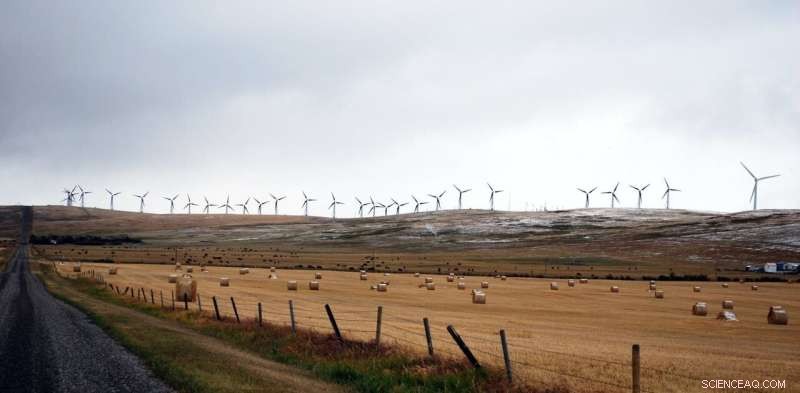
Rural Canada has and will continue to play an essential role in the social, economic and cultural fabric of this country. Credit: Brian Holdsworth/Unsplash
Rural Canada is vital to the socio-economic fabric of this country.
Rural communities are places of employment, food production, energy generation, resource extraction, environmental stewardship, cultural production and leisure. They are also home to millions of people. The COVID-19 pandemic, however, has illuminated many new and existing inequities, which are shaping the realities of life in rural Canada.
In our work with the Canadian Rural Revitalization Foundation, we co-edited the 2021 State of Rural Canada Report. The report provides a snapshot of key rural issues while also highlighting opportunities, recovery and resiliency in each province and territory.
Rural resilience in changing times
Rural communities across Canada are facing unprecedented changes—from demographic shifts and economic restructuring to the impacts of climate change and weak rural development policies and programs.
The COVID-19 pandemic accelerated many changes impacting rural communities. For example, communities without reliable broadband could not easily shift to remote work and education.
However, the researchers who authored chapters in our report illustrate the many ways rural people and organizations have demonstrated resilience to challenges and change.
Understanding resilience, or the processes through which community members use existing assets and resources to manage change and build strong, inclusive and sustainable communities, is important for community well-being.
For example, in response to the pandemic, Farmer's Markets of Nova Scotia quickly coordinated a shift to online markets and pick-up hubs. In Labrador, the NunatuKavut Community Council implemented a number of programs including food and heat vouchers.
Other examples of resiliency include Coronach, Sask., which has embarked on a journey to discover a new identity to mitigate the anticipated closure of the coal industry. As part of this revisioning, Coronach created the South Saskatchewan Regional Economic Partnership. And Tr'ondëk Hwëch'in First Nation, in partnership with Yukon College, developed the Tr'ondëk Hwëch'in Teaching and Working Farm to address food security on their traditional territory.
These examples and others provided throughout the report, highlight the importance of collaboration, capacity and support for rural people and organizations. In fact, supporting rural resilience is key for rural people and organizations in continuing to shape their own stories of success.
Supporting rural resilience
Many communities did not have appropriate capacity and resources—such as staff or budgets for economic development— to respond to changes related to the pandemic. These examples highlight the importance of strong policy frameworks in supporting rural communities.
Here are five recommendations on how we can support rural resilience through policy and practice.
The pandemic helped highlight the issues faced by rural Canadians. Rural Canada has and will continue to play an essential role in the social, economic and cultural fabric of this country.
All Canadians must be invested in the sustainability and resilience of rural communities through critical reflection, political action and continued creativity in policy development.