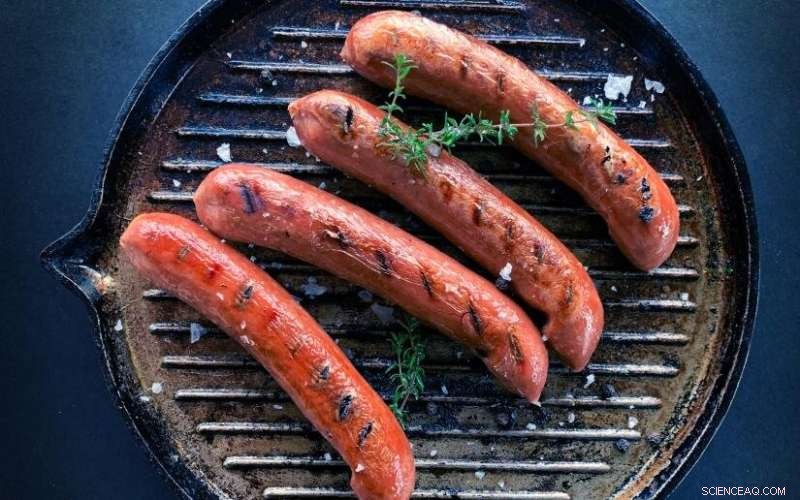
Throw another snag on the barbie? The study found that more than a quarter of those surveyed plan to substitute a plant-based product for an animal-based one in the next 12 months. Credit: LikeMeat on Unsplash
A new study conducted by the Institute of Sustainable Futures has found that Australians know what they're eating when they choose plant-based products.
A first-of-a-kind study by the Institute for Sustainable Futures at the University of Technology Sydney (UTS) shows Australians are unlikely to be 'duped' into eating plant-based meat products, and reveals consumer confusion instead falls on unclear animal-product labeling.
The recent Senate Rural and Regional Affairs and Transport Legislation Committee inquiry into food labeling in Australia was instigated and headed up by Queensland Nationals' Senator and grazier, Susan McDonald. Rationale for the inquiry to take place was based on limited anecdotal suggestions that current product labeling is resulting in consumers mistaking meat substitutes for actual meat.
The Senate inquiry targeted labeling featuring images of livestock and descriptive terms such as "meat," "beef," "lamb," "chicken," and/or "goat," claiming that these elements contribute to consumer confusion. No formal independent consumer research was conducted to support these assertions.
To test these claims, national not-for-profit organizations No Meat May and Vegan Australia engaged the Institute for Sustainable Futures at UTS to undertake an independent national consumer survey. The survey asked 1,014 consumers across all states and territories in Australia—including rural and regional areas—about their experience with and perceptions of plant-based foods. Questions posed included the presentation of images of currently available supermarket products and whether the respondent thought they were: a plant-based meat product, an animal-based meat product, or whether they were undecided/unsure.
The Australian-first survey showed that incorrect choices are highly unlikely to occur as a result of misleading labeling, and that increased exposure to plant-based meat substitutes and their labels reduces the risk of incorrect choices even further. The survey results also indicated that many consumers are keen to eat more plant-based products, but that the incidence of consumer confusion in this product category is significantly higher than when seeking meat-based products.
Key findings of the survey include:
Dr. Tani Khara, Senior Research Consultant at the Institute for Sustainable Futures says, "The Senate inquiry carries some significant implications for the plant-based food sector. Banning certain words from appearing on labels will make it harder for those consumers who want to buy meat substitutes to find what they are seeking. In the absence of any existing independent research on the issue, it was important that we spoke to consumers directly, to find out what Australians really think about plant-based products."
Ryan Alexander, Co-Founder of No Meat May, a global challenge that encourages people to eat more plant-rich diets, says that the research findings are consistent with feedback from their thousands of participants each year. "We know from 10 years of running No Meat May, and rapidly increasing sign-ups, that more people each year are looking for meat alternatives for several reasons—including health, the environment and animal cruelty.
"This UTS research tells us what we already suspected; that this Senate inquiry drastically underestimates the intelligence of the average Australian, who is perfectly capable of discerning the difference between a meat product and its plant-based alternative despite the use of similar wording or imagery," says Alexander. "This, in just the same way that Australians understand that almond, soy and oat milks do not come from cows, despite the use of the word 'milk.'"
"With the average Australian eating four times the maximum amount of meat that is considered sustainable, and three times the amount considered healthy, we need our government to show leadership and support people shifting to less meat, and not to create barriers for people trying to do the right thing."
Vegan Australia was motivated to support the UTS research in order to discover if there was an evidence-based foundation to justify a Senate inquiry into plant-based product labeling. Greg McFarlane, a Board Director of the national advocacy charity reflects that, "Instead of mere hearsay, we now finally have an independent academic study into whether consumer confusion is a genuine issue. The survey results show that Aussies are rarely 'duped' by labels. This taxpayer-funded inquiry should never have got off the ground."
McFarlane, who also facilitates the Vegan Australia Certified labeling program whose mark appears on a rapidly growing number of products on Australian shelves, says, "The survey revealed the exact opposite of the contention by The Nationals' inquiry: many more Australians experience accidentally consuming animal-based products when they were seeking out foods that were animal-free, not the other way around. These findings show the whole premise for the Senate inquiry was unfounded. With so many pressing issues facing the Australian agricultural sector, the UTS study exposes The Nationals' labeling inquiry as a farce."
See a summary of the survey results here.