Credit: The REGARD project
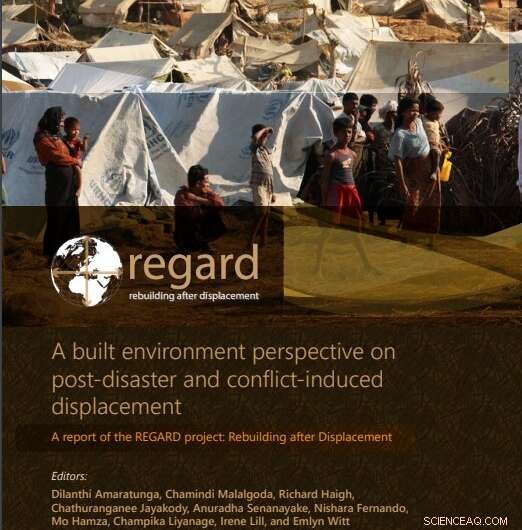
A collaborative research project led by the University of Huddersfield's Global Disaster Resilience Center and titled "REGARD (REbuildinG AfteR Displacement)," set out to investigate the role of built environment in the context of displacement. Now, a final project report has been published and presents a summary of the findings from this international project.
The REGARD project, co-funded by EU Erasmus+ Strategic Partnerships program, was launched in September 2018 with an aim to develop competencies in rebuilding communities following a disaster and conflict-induced mass displacements from the perspective of the built environment.
The project consortium consisted of five international universities from four different countries and was led by the University of Huddersfield's Professor Dilanthi Amaratunga, Professor Richard Haigh and Dr. Chamindi Malalgoda. The team also included experts from Sweden's Lund University, the University of Central Lancashire, UK, Estonia's Tallinn University of Technology and the University of Colombo in Sri Lanka.
"Displacement is one of the most pressing challenges faced by society today," said Professor Dilanthi Amaratunga, co-director of the University's Global Disaster Resilience Center.
"For example," she added, "the sudden exodus of Ukrainian refugees is at a scale not seen in Europe since World War II and has prompted a swift international and regional response, however, as this momentum is unlikely to sustain itself, there are long term challenges to be addressed.
"Our work could help to support efforts that balance the needs of both refugees and host communities," she said.
Supporting the rebuild of communities
On achieving the aim of the project, the REGARD research team produced several outputs to support the rebuilding of communities following a disaster and conflict-induced mass displacement: