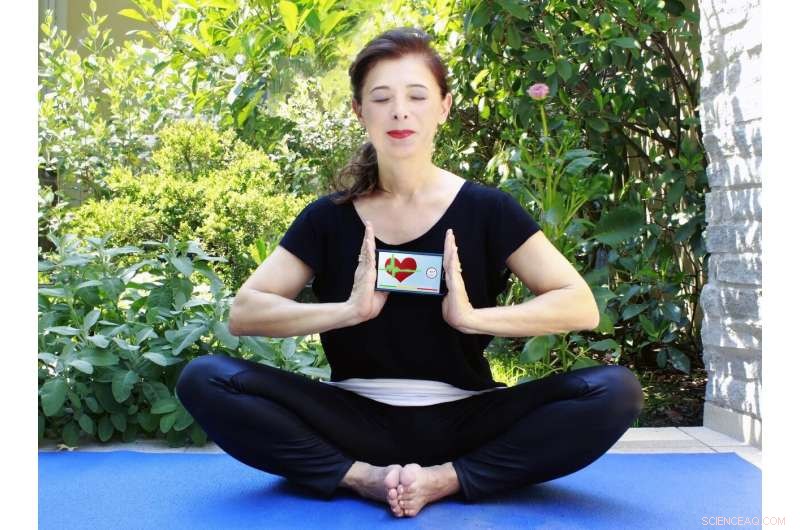
Taking short breaks to get in some moderate-intensity exercise during your workday from home can prevent aches and pains, improve your focus and help reduce your risk of cardiovascular disease, say U of A physiotherapists. Credit: CC0 Public Domain
Teachers from kindergarten through 12th grade across the U.S. are making the shift from teaching classes in person to teaching from a distance, which requires creating online assignments and activities to keep their students learning.
But what does this shift look like for physical education (P.E.) teachers?
Chad Killian, assistant professor in the College of Education & Human Development's Department of Kinesiology and Health, is working with University of Illinois doctoral students Shelby Ison and Shannon Pennington to create a series of free, online teaching modules that high school physical education teachers can use to connect with their students.
These modules include content videos, movement resources, ideas for assessment and support videos to help teachers navigate the transition to an online format.
"We envision teachers taking the content, sharing it with their students and helping them find activities that are meaningful for them," Killian said. "We want to support teachers' adoption of this and give them a chance to make it their own, so we're including a blank slide deck and encouraging them to add voiceovers so students will recognize their teachers' voices."
He and his colleagues are designing these teaching modules for a time when students in many communities are practicing social distancing, and they encourage P.E. teachers to be understanding and thoughtful when it comes to promoting healthy behaviors at home.
"What is the role of assessment? Do teachers need to hold students accountable at this time, when students are also being asked to do so much classwork at home?" Killian said. "We're pivoting from a structured, accountability standpoint to encouraging students to find enjoyable, meaningful physical activities to do with their families in order to combat sedentary behavior and really just manage and thrive during these precarious times."
Killian plans to continue conducting research that leads to designing online, evidence-based curriculum for physical education that benefits students, an area with very little research at present.
"It's been a journey for us," he said. "We really want to take a systematic approach to helping teachers and students. This project has been great in that it gives us a chance to help teachers and students in the immediate, while also providing key insight that will influence future research and design decisions."
To access the first two sets of modules Killian and his colleagues have designed, visit drive.google.com/drive/folders … R5krm3PwyJy_Dv-iycoN.
Considerations for Physical Education Teachers
P.E. teachers may be struggling to shift their teaching to an online format. Killian offers a few suggestions to those teachers making the transition:
Promoting Physical Activity at Home
How can students and their families incorporate consistent physical activity into their days at home? Killian has three tips for keeping active in an era of social distancing: