Semiconductors and nanotechnology are two intertwined fields that have revolutionized technology. While both focus on manipulating materials at the atomic level, they have distinct roles:
Semiconductors:
* What they are: Materials with conductivity between that of a conductor and an insulator. They allow controlled flow of electrons, making them ideal for building electronic components.
* How they work: Semiconductors like silicon and germanium have their conductivity altered by adding impurities (doping). This creates "n-type" (excess electrons) and "p-type" (electron "holes") materials. Combining these creates junctions that control electron flow based on applied voltage, forming transistors, diodes, and other components.
* Applications: Semiconductors are the foundation of modern electronics, powering everything from computers and smartphones to cars and medical devices.
Nanotechnology:
* What it is: The manipulation of matter on an atomic and molecular scale, typically 1-100 nanometers.
* How it works: Nanomaterials have unique properties compared to bulk materials due to their increased surface area and quantum effects. These properties can be controlled by manipulating size, shape, and composition at the nanoscale.
* Applications: Nanotechnology is being explored in various fields:
* Medicine: Targeted drug delivery, diagnostic tools, tissue engineering
* Electronics: Smaller and faster transistors, high-density data storage
* Energy: Solar cells, batteries, fuel cells
* Materials: Stronger and lighter materials, self-cleaning surfaces
The Connection:
* Semiconductors are a key area of nanotechnology research. By controlling the size and structure of semiconductor materials at the nanoscale, scientists can create even more efficient and powerful electronic devices.
* Nanotechnology is also used to create new semiconductor materials with improved properties, like enhanced conductivity or better light absorption.
Examples:
* Transistors: The foundation of modern electronics, getting smaller and more powerful thanks to nanotechnology advancements.
* Quantum dots: Tiny semiconductor crystals with controllable light emission, used in displays, lasers, and biological imaging.
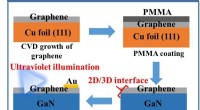
* Graphene: A single layer of carbon atoms, exhibiting exceptional conductivity and strength, with potential applications in flexible electronics, sensors, and energy storage.
Challenges and Future Directions:
* Manufacturing challenges: Scaling down to the nanoscale requires precise control and specialized equipment.
* Environmental concerns: The long-term impact of nanomaterials on human health and the environment needs further research.
* Ethical considerations: The potential for powerful new technologies raises ethical questions about safety, privacy, and equitable access.
Both semiconductors and nanotechnology are rapidly evolving fields with immense potential to shape the future of technology. Their continued development promises breakthroughs in medicine, energy, materials science, and many other areas.