Structure and Bonding:
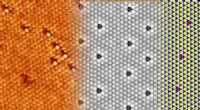
* One-Atom-Thick: Graphene is a single layer of carbon atoms arranged in a hexagonal lattice, resembling a honeycomb structure. This makes it the thinnest known material, even thinner than a single strand of DNA.
* Strongest Material: The strong covalent bonds between carbon atoms give graphene unparalleled strength. It's the strongest material ever measured, about 200 times stronger than steel, yet it's incredibly light.
* Exceptional Conductivity: Graphene is a highly conductive material for both electricity and heat. The delocalized electrons within the structure can move freely, making it an efficient conductor.
Properties and Applications:
* Electronics: Its conductivity makes it promising for applications like flexible touchscreens, transparent displays, and faster transistors.
* Energy Storage: Graphene's large surface area and high conductivity make it an ideal material for building high-capacity batteries, supercapacitors, and fuel cells.
* Sensors: Graphene can detect even minute changes in its environment, making it suitable for sensitive sensors for gases, chemicals, and biomolecules.
* Composite Materials: Adding graphene to other materials like polymers and plastics can significantly enhance their strength, conductivity, and heat resistance.
* Water Filtration: Graphene's microscopic pores can filter out contaminants and pollutants from water, making it a potential solution for clean water production.
* Biomedicine: Graphene's biocompatibility and ability to interact with biological molecules makes it promising for drug delivery, tissue engineering, and medical imaging.
How it Works in Practice:
* Electrons Flow Freely: Graphene's structure allows electrons to move freely throughout the material without encountering much resistance. This is why it's a great conductor.
* Strong Bonds: The strong covalent bonds between carbon atoms contribute to graphene's incredible strength and flexibility. It can bend, fold, and stretch without breaking.
* Large Surface Area: Graphene has a large surface area, meaning it can interact with a lot of other molecules. This makes it ideal for applications like gas storage and catalysis.
* Transparency: Graphene is transparent to visible light, but it absorbs strongly in the infrared spectrum, making it useful for optical applications.
Challenges and Future Directions:
While graphene holds immense potential, challenges remain before it can be widely implemented in various applications. These include:
* Large-Scale Production: Cost-effective and scalable production methods are essential for making graphene accessible.
* Controlling Properties: Tuning graphene's properties for specific applications can be challenging.
* Integration with Existing Technologies: Integrating graphene with existing technologies and manufacturing processes can be complex.
Despite these challenges, research on graphene continues to advance rapidly, and its impact on various industries and technologies is expected to grow significantly in the years to come.