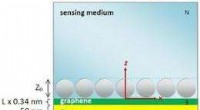
Both anatase and rutile are crystalline forms of titanium dioxide (TiO2), often found in nano-sized particles. While their chemical composition is identical, their crystal structures and resulting properties differ significantly:
Anatase:
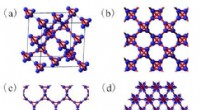
* Crystal structure: Tetragonal, with a higher surface area than rutile.
* Properties:
* Higher photocatalytic activity: Due to its higher surface area and unique electronic band structure, anatase is more efficient in absorbing light and promoting photocatalytic reactions.
* Lower refractive index: Making it transparent in visible light.
* Lower electrical conductivity: Limited applications in electronics.
* Metastable: Less stable than rutile and can transform into rutile under high temperatures.
Rutile:
* Crystal structure: Tetragonal, denser and more stable than anatase.
* Properties:
* Lower photocatalytic activity: But still used in photocatalysis due to its higher stability.
* Higher refractive index: Used in pigment production and optical coatings.
* Higher electrical conductivity: Used in electronics, sensors, and solar cells.
* Stable: More stable than anatase, resisting transformation at high temperatures.
Nano-sized TiO2:
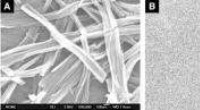
Both anatase and rutile exhibit enhanced properties when synthesized as nanoparticles, including:
* Increased surface area: Leading to improved catalytic activity, absorption, and reactivity.
* Quantum size effects: Altering their optical and electronic properties.
Applications:
* Anatase: Photocatalysis, self-cleaning surfaces, air purification, water treatment, and pigments.
* Rutile: Pigments, solar cells, sensors, electronics, and UV blockers.
In summary:
Both anatase and rutile are valuable forms of TiO2 with distinct properties and applications. Anatase is more photocatalytic, while rutile is more stable and conductive. Their nano-sized forms further enhance these properties, making them versatile materials in various fields.