* Nanograms are incredibly small: One nanogram is a billionth of a gram (1/1,000,000,000). For perspective, a grain of sand weighs about 10,000 nanograms.
* Limited equipment: Regular scales and balances are not sensitive enough to measure such tiny amounts.
* Specialized instruments: To measure nanograms, you need specialized laboratory instruments like:
* Analytical balances: Can measure down to micrograms (millionths of a gram), but they are still not sensitive enough for nanograms.
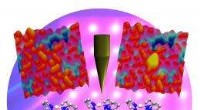
* Atomic Force Microscopes (AFMs): These can measure the weight of individual molecules, which are much smaller than nanograms.
* Mass spectrometry: This technique measures the mass-to-charge ratio of ions, allowing for the detection and quantification of nanogram amounts of substances.
So, while you can't directly measure nanograms with everyday tools, they are a real unit of measurement used in scientific research and advanced technologies.