1. Unique Structure:
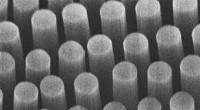
* Cylindrical Shape: Carbon nanotubes are essentially rolled-up sheets of graphene, a single layer of carbon atoms arranged in a hexagonal lattice. This cylindrical shape creates a continuous, one-dimensional path for electrons to travel.
* Strong sp² Hybridization: The carbon atoms in nanotubes are bonded by strong sp² hybrid orbitals, forming a very strong and rigid structure. This strong bonding also allows electrons to move freely within the nanotube.
2. Delocalized Electrons:
* Pi Electrons: Each carbon atom in the nanotube contributes one electron to a delocalized pi electron system. These electrons are not bound to a specific atom but can move freely within the nanotube's structure.
* Conductivity: This delocalization of electrons allows for the flow of electric current along the length of the nanotube.
3. Types of Carbon Nanotubes:
* Metallic Nanotubes: These nanotubes have a specific chirality (the angle of the rolled-up graphene sheet) that results in a band structure similar to metals, enabling high electrical conductivity.
* Semiconducting Nanotubes: Other chiralities create a band gap, similar to semiconductors, making them less conductive but still useful in electronics.
In Summary:
The combination of the nanotube's cylindrical structure, strong sp² bonds, and delocalized pi electrons gives carbon nanotubes their remarkable electrical conductivity. This property makes them promising materials for a variety of applications in electronics, energy storage, and more.