Here's a breakdown of its key features:
* Small sample volume: It typically requires only 1-2 µL of sample, making it ideal for precious or limited samples.
* High sensitivity: It can detect very low concentrations of analytes, down to the nanogram range.
* Fast and easy to use: The measurement process is quick and automated, requiring minimal user intervention.
* Versatile: It can measure absorbance at different wavelengths, allowing for the determination of both concentration and purity.
* Non-destructive: The sample is not consumed during the measurement process.
How it works:
The NanoDrop utilizes a "drop-and-measure" technique:
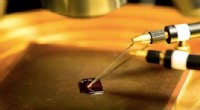
1. A small sample is placed on a fiber optic probe.
2. The probe is then raised to create a small, optically clear sample column between the probe and the top of the instrument.
3. A beam of light is passed through the sample column.
4. The instrument measures the amount of light that passes through the sample, which is proportional to the concentration of the analyte.
Applications:
NanoDrop spectrophotometers are widely used in various research and clinical settings, including:
* Molecular biology research: Quantifying DNA, RNA, and protein samples for PCR, sequencing, and other molecular biology techniques.
* Drug discovery: Assessing the concentration of biomolecules in drug development and analysis.
* Clinical diagnostics: Analyzing samples for disease markers and other relevant biomolecules.
* Food science: Determining the quality and purity of food products.
Overall, the NanoDrop is a powerful and convenient tool for researchers and professionals who need to accurately measure the concentration and purity of small-volume samples.