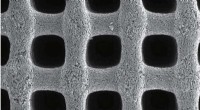
* Earlier Observations: There were earlier observations of similar structures, but they were not recognized as nanotubes. For example, in 1952, Radushkevich and Lukyanovich published an image of what appears to be a multi-walled carbon nanotube.
* Iijima's Key Contribution: Iijima's work was groundbreaking because he clearly identified the structure of single-walled carbon nanotubes and their potential applications. He used high-resolution transmission electron microscopy to visualize these structures.
* Further Development: After Iijima's discovery, many researchers contributed to the development of carbon nanotubes, including Richard Smalley, who won the Nobel Prize in Chemistry for his work on fullerenes.
Therefore, while Iijima is often credited with discovering carbon nanotubes, the story is more accurately described as a collaborative effort that built upon previous research. His work was crucial in establishing the understanding and potential of these remarkable structures.