1. Understanding the Fundamentals:
* Scientific discoveries lay the foundation for technological innovation. For example, the discovery of electricity paved the way for countless technological advancements, from light bulbs to computers.
* Scientific research provides a deep understanding of natural phenomena. This understanding allows scientists and engineers to design and develop new technologies that leverage these principles. For instance, understanding aerodynamics has led to the development of airplanes and wind turbines.
2. Providing Tools and Techniques:
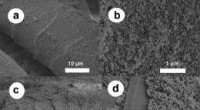
* Scientific instruments and techniques are often crucial for technological progress. High-powered microscopes allow scientists to observe microscopic structures, leading to advancements in medicine and materials science.
* New materials and processes discovered by scientists can be used to create innovative technologies. The discovery of semiconductors led to the creation of transistors, which revolutionized electronics.
3. Solving Real-world Problems:
* Scientific research often identifies problems that need technological solutions. For example, climate change research has led to the development of renewable energy technologies.
* Scientific discoveries can inspire new technological solutions. The understanding of the human genome has led to personalized medicine and gene editing technologies.
4. Iterative Process:
* Technology often leads to new scientific discoveries. The development of telescopes allowed astronomers to observe distant galaxies and stars, leading to new discoveries about the universe.
* Scientific advancements can lead to refinements and improvements in existing technologies. For example, advancements in materials science have led to lighter, stronger materials used in airplanes and other technologies.
In essence, science provides the fundamental knowledge, tools, and motivation for technological development, while technology provides new tools for scientific exploration. This constant interplay drives innovation and pushes both fields forward.