* Scale: A nanometer (nm) is incredibly small, one billionth of a meter. For comparison, a human hair is about 50,000 to 100,000 nanometers wide.
* Limits of Light Microscopy: Even the most powerful light microscopes have a resolution limit of around 200 nm. This means they can't distinguish between objects smaller than that.
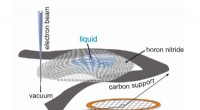
* Electron Microscopy: To see objects at the nanoscale, we need to use electron microscopy. These instruments use beams of electrons, which have much shorter wavelengths than light, allowing for much higher resolution.
Types of Electron Microscopy:
* Transmission Electron Microscopy (TEM): Uses electrons that pass through a thin sample, creating an image of the internal structure.
* Scanning Electron Microscopy (SEM): Uses electrons that scan the surface of a sample, producing a 3D image.
Magnification is only part of the equation:
While electron microscopes can magnify objects millions of times, it's not just about magnification. Resolution (the ability to distinguish between two closely spaced objects) is the key to seeing at the nanoscale.
So, while a specific magnification number for seeing a nanometer doesn't exist, electron microscopy is the tool needed to visualize objects at that scale.