How NMR works:
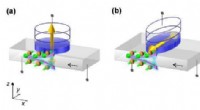
* Nuclear Spins: NMR relies on the fact that certain atomic nuclei have a property called "spin." This spin creates a magnetic moment.
* Magnetic Field: When placed in a strong magnetic field, these nuclei align themselves.
* Radio Waves: Applying radio waves of specific frequencies can cause the nuclei to "flip" their spin. This process absorbs energy, and the signal emitted when the nuclei return to their original state is detected.
* Chemical Environment: The exact frequency at which a nucleus absorbs energy depends on its chemical environment, including the surrounding atoms and molecules. This provides valuable information about the structure and dynamics of the molecule.
How NMR is used for Nanomaterials:
1. Structure and Composition:
* Solid-State NMR: This technique is particularly useful for analyzing the structure and composition of solid nanomaterials. It can reveal information about:
* Crystalline structure (e.g., the presence of different phases or defects)
* Local chemical environment of atoms in the material
* The presence of specific functional groups
* Solution-State NMR: Useful for characterizing nanomaterials dispersed in solutions, providing insights into:
* The size and shape of nanoparticles
* The interactions between nanoparticles and their surroundings (e.g., ligands, solvents)
* The dynamics of nanoparticle formation and aggregation
2. Surface Characterization:
* Surface NMR: Can be used to study the surface properties of nanomaterials, including:
* The surface composition and functionalization
* The interactions between the surface and adsorbed molecules
* The dynamics of surface processes
3. Dynamics and Interactions:
* Relaxation Time Measurements: Provide insights into the mobility and interactions within the nanomaterial.
* Diffusion NMR: Measures the diffusion rates of molecules within the nanomaterial, giving information about porosity, surface properties, and transport phenomena.
Advantages of NMR for Nanomaterials:
* Non-Destructive: NMR is a non-destructive technique, meaning it does not damage the sample.
* Elemental Sensitivity: It can provide information about the elemental composition and bonding of the nanomaterial.
* Structural Detail: It can reveal detailed structural information about the material.
* Dynamic Insights: It can provide insights into the dynamics and interactions within the nanomaterial.
Limitations:
* Sensitivity: NMR can be less sensitive than other techniques, especially for small nanoparticles.
* Sample Preparation: Sample preparation for NMR can be challenging, particularly for solid nanomaterials.
Examples:
* Characterization of Metal Nanoparticles: NMR can be used to identify the metal core, the presence of surface ligands, and the oxidation state of the metal atoms.
* Analysis of Carbon Nanotubes: NMR can provide insights into the structure and composition of carbon nanotubes, including the presence of defects and functional groups.
* Study of Semiconductor Nanocrystals: NMR can be used to characterize the surface properties, the presence of impurities, and the size distribution of semiconductor nanocrystals.
Overall, NMR is a valuable tool for characterizing the structure, composition, and dynamics of nanomaterials. It complements other characterization techniques and provides unique insights into the properties of these materials.