Here's a breakdown of how SEM works and the types of conclusions you can draw:
How SEM works:
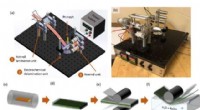
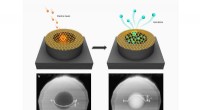
* Electron beam: A focused beam of electrons is scanned across the sample surface.
* Interactions: The electrons interact with the sample, producing various signals:
* Secondary electrons: Provide topographical information (surface shape and texture).
* Backscattered electrons: Provide information about elemental composition and density.
* X-rays: Reveal the elemental composition of the sample.
* Image formation: The signals are detected and processed to create images.
Types of conclusions you can draw from SEM data:
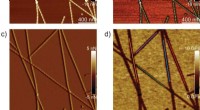
* Surface morphology: Determine the shape, size, and texture of the sample.
* Composition: Identify the elements present in the sample and their distribution.
* Crystal structure: Analyze crystallographic features and grain boundaries.
* Microstructure: Observe the internal structure of materials at the microscopic level.
* Particle size and shape: Measure and characterize the size and shape of particles.
* Fracture analysis: Investigate the mode of fracture in materials.
* Failure analysis: Determine the cause of failure in materials or components.
* Biological specimens: Examine the surface structure of cells, tissues, and organisms.
Important Note: SEM itself doesn't draw conclusions; it provides data that needs to be analyzed. The conclusions depend on the specific research question, sample, and the expertise of the researcher.
Examples of conclusions drawn from SEM analysis:
* A study of a metal alloy might conclude that the presence of a certain element contributes to increased strength and wear resistance.
* A study of a pollen grain might conclude that the unique surface structures are important for pollination.
* A study of a failed component might conclude that the fracture occurred due to a defect in the material or a manufacturing error.
In summary, SEM is a powerful tool for generating images and data, but the conclusions drawn are based on the analysis and interpretation of that data in the context of the specific research question.