1. Optical Fibers:
* Core and Cladding: Polymers form the core and cladding of optical fibers, guiding light signals over long distances with minimal loss.
* Advantages: Polymers offer flexibility, low cost, and ease of fabrication compared to glass fibers.
* Applications: Telecommunications, data transmission, sensors, and medical imaging.
2. Lenses and Prisms:
* Lightweight and Moldable: Polymers can be molded into complex lens and prism shapes, making them ideal for optical devices like cameras, telescopes, and microscopes.
* Advantages: Low weight, high refractive index, and customizable optical properties.
* Applications: Consumer optics, imaging systems, and optical components.
3. Displays and Screens:
* Liquid Crystal Displays (LCDs): Polymer films are used as alignment layers in LCDs, controlling the orientation of liquid crystals and influencing light polarization.
* Organic Light-Emitting Diodes (OLEDs): Polymers are used in OLEDs as emissive materials, emitting light when an electric current is applied.
* Advantages: Flexibility, high color saturation, and low power consumption.
* Applications: Flat-screen TVs, mobile phone displays, and flexible displays.
4. Waveguides and Photonics:
* Integrated Optics: Polymers are used in integrated optics to create waveguides, splitters, and other optical components on a chip.
* Advantages: Ease of fabrication, low cost, and flexibility in designing complex optical circuits.
* Applications: Optical communications, sensors, and optical computing.
5. Optical Coatings and Films:
* Anti-Reflective Coatings: Polymers can be applied as thin films to reduce reflections on lenses, windows, and other optical surfaces.
* Optical Filters: Polymer films can be designed to selectively absorb or transmit light at specific wavelengths.
* Advantages: Durable, customizable, and cost-effective.
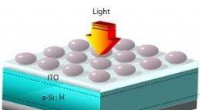
* Applications: Eyeglasses, camera lenses, solar cells, and optical sensors.
6. Bio-Imaging and Sensing:
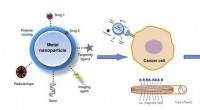
* Fluorescent Probes: Polymers can be functionalized with fluorescent dyes, making them useful for bio-imaging and sensing applications.
* Advantages: Biocompatibility, high sensitivity, and ability to target specific biomolecules.
* Applications: Medical imaging, drug delivery, and environmental monitoring.
Key Advantages of Polymers in Optics:
* Flexibility: Polymers can be easily molded and shaped into complex optical components.
* Low Cost: Polymer-based optical materials are generally more affordable than traditional glass or crystalline materials.
* Customization: The optical properties of polymers can be tailored by adjusting their chemical structure and composition.
* Lightweight: Polymers are significantly lighter than glass, making them ideal for portable optical devices.
Limitations of Polymers in Optics:
* Environmental Sensitivity: Some polymers can degrade over time when exposed to heat, moisture, or UV light.
* Limited Performance: Polymers may not always achieve the same high performance as glass or crystalline materials in terms of refractive index, transparency, and durability.
Conclusion:
Polymers offer a wide range of possibilities for optical applications, from basic components like fibers to complex integrated optics and bio-imaging devices. Their flexibility, low cost, and ability to be customized make them a valuable addition to the field of optics. As research continues, we can expect even more exciting developments in polymer-based optical materials in the future.