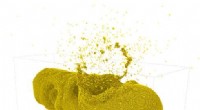
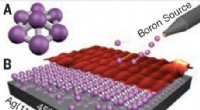
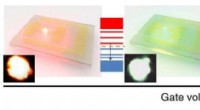
Aggregation can have significant implications on the properties and behavior of nanoparticles. It can affect their size distribution, surface area, reactivity, and optical properties. For example, aggregation can reduce the surface area available for chemical reactions, thereby decreasing the catalytic activity of nanoparticles. It can also alter the optical properties of nanoparticles, such as their color and absorbance, which can be crucial in applications such as sensing and imaging.
To prevent or control aggregation, various strategies can be employed. These include surface functionalization, electrostatic stabilization, steric stabilization, and the use of dispersants or surfactants. By modifying the surface chemistry or introducing repulsive forces between nanoparticles, aggregation can be minimized, ensuring better dispersion and stability of the nanoparticles in the desired medium.
Understanding and controlling aggregation is important in various fields of nanotechnology, including catalysis, sensing, drug delivery, and electronics. By optimizing the stability and dispersion of nanoparticles, it is possible to harness their unique properties and achieve desired performance in targeted applications.