The Enigma Surrounding DLC Formation
Traditionally, DLC was believed to form via a process called "sp2-to-sp3 reconfiguration." This theory suggested that the initial sp2-bonded carbon atoms in the precursor material rearrange to form more stable sp3 bonds, resulting in the formation of DLC. However, this model had limitations as it could not account for the complete transformation process and often resulted in discrepancies between experimental observations and theoretical predictions.
Enter Machine Learning: Unveiling the Hidden Complexities
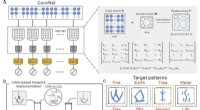
To address the challenges associated with the traditional model, researchers leveraged the power of machine learning. They employed a supervised machine learning algorithm, specifically a support vector machine (SVM), to analyze a vast dataset of experimental observations and computational simulations related to DLC formation.
Data-Driven Insights and Model Development
By meticulously training the SVM algorithm with the available data, researchers aimed to identify the critical factors governing the transformation of sp2 to sp3 bonds, thereby shedding light on the intricate details of DLC formation. The insights gained from the machine learning analysis enabled the development of a new model that provides a comprehensive description of the transformation process.
Key Findings and Implications
The new model reveals that DLC formation involves a more complex interplay of factors than previously thought, involving not only sp2-to-sp3 reconfiguration but also the breaking and formation of various types of bonds, including C-H and C-C. Additionally, the model highlights the significant role of temperature and pressure in influencing the transformation process.
This paradigm shift in our understanding of DLC formation opens up new avenues for material design and optimization. By gaining precise control over the critical factors identified by the model, researchers can now engineer DLC with tailored properties for specific applications, unlocking its full potential in diverse technological fields.
Summary: A New Era of DLC Development
Through the fusion of experimental data, computational simulations, and machine learning, researchers have unlocked a deeper comprehension of diamond-like carbon formation. The development of a new model, enabled by machine learning, paves the way for the rational design and engineering of DLC materials with superior properties, leading to groundbreaking advancements in industries ranging from healthcare to aerospace and beyond.