Superconductivity is a state of perfect electrical conductivity exhibited by certain materials, called superconductors, when cooled below a characteristic critical temperature. Below the critical temperature, the electric resistance of a superconductor drops down to exactly zero and it can conduct an electric current without any losses (as long as the current does not exceed a critical value). This phenomenon is the cornerstone of many modern technologies such as powerful magnets, ultra-sensitive detectors of magnetic fields (SQUIDs), and high-speed digital devices.
Individual nanowires (wires with dimensions on the order of billionths of a meter) made from superconductors have been actively studied for the last two decades. When superconductors are used at such minuscule scales, one can observe exotic quantum phenomena that are absent in bulk materials. For example, individual nanowires were theoretically predicted to undergo quantum phase transitions, the change in material's state driven by quantum fluctuations, not temperature. Unfortunately, these predictions remained indirect because until recently there was no tool that would enable direct observation of superconductivity and quantum phase transitions in individual nanowires.
"In our previous work reported last year in Nature Communications, we developed an experimental technique that uses microwaves to induce and detect superconductivity in nanowires. This technique is very unique, and it allows us for the first time not just to say whether an individual nanowire shows superconductivity or not, but also to directly observe various characteristic features of superconducting nanowires, including the resistance-free state, critical current, energy gap, and so on. Now we have further improved our technique to reach the sensitivity that enables direct observation of the effect of an external magnetic field on a single superconducting nanowire," Evgeny Mishchenko, a senior research scientist at the Quantum Materials and Devices Lab of the Skoltech Center for Quantum Science and Technology, explains.
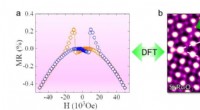
The scientists took individual nanowires made from aluminum —a common superconductor—and used their technique to apply and simultaneously detect an electric current along the nanowires. They then exposed the nanowires to an external magnetic field and observed directly the emergence and evolution of the resistance-free state. They revealed the intricate evolution of the resistance-free state as a function of the strength of the magnetic field, which is explained by the theory.
"We've been working on perfecting this technique for almost a decade, and I am very excited that it finally allows us to directly explore and understand the basic physics behind the operation of nanoscale superconducting devices," says Alexander Golubov, a professor at Skoltech and the head of the Quantum Materials and Devices Lab.
The scientists emphasize that further development of the technique may pave the way toward practical realization of quantum computing and quantum communication technologies based on individual superconductor nanowires. For example, the observed quantum phase transition is believed to be very promising for the realization of so-called Majorana fermions that are considered the most viable candidates for qubits in topological quantum computing.