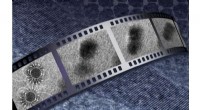
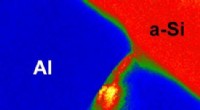
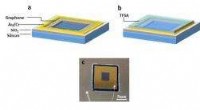
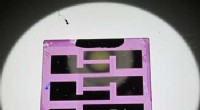
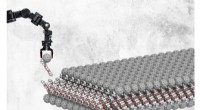
The method involves using a self-assembly process to grow the nanobridges on a silicon substrate. The substrate is first coated with a layer of silicon dioxide, and then a layer of metal is deposited on top of the oxide layer. The metal layer is then patterned using photolithography, and the exposed silicon dioxide is etched away. This leaves behind a series of metal nanowires.
The nanowires are then heated until they melt and form droplets. The droplets then fall onto the substrate and form nanobridges. The size and shape of the nanobridges can be controlled by the temperature of the substrate and the size of the droplets.
The researchers say that this method is capable of producing nanobridges with a high degree of precision and uniformity. They believe that this method could be used to mass-produce nanodevices for a variety of applications.
Nanobridges have a number of potential applications in nanodevices. Some of these applications include:
* Transistors: Nanobridges could be used as transistors in nanocircuits. Transistors are switches that control the flow of current in a circuit. Nanobridges could be used to make transistors that are smaller, faster, and more energy-efficient than traditional transistors.
* Sensors: Nanobridges could be used as sensors to detect the presence of specific chemicals or gases. Nanobridges could be coated with a material that reacts with the target chemical or gas, causing the nanobridge to change its electrical properties. This change in electrical properties could then be detected and used to determine the presence of the target chemical or gas.
* Medical devices: Nanobridges could be used in medical devices, such as drug delivery systems and tissue engineering. Nanobridges could be used to deliver drugs to specific cells or tissues in the body. Nanobridges could also be used to create scaffolds for growing new tissue.
The potential applications of nanobridges are vast. As the field of nanotechnology continues to develop, we can expect to see even more innovative and groundbreaking applications of this technology.