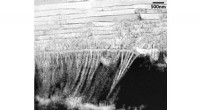
* Scientists at the National Institute of Standards and Technology (NIST) have developed a new way to measure magnetic fields using superconducting nanowires.
* The technique is more sensitive than previous methods and could be used in a variety of applications, such as detecting brain activity and searching for dark matter.
* The nanowires are made of a material that becomes superconducting at very low temperatures. When a magnetic field is applied, the superconducting properties of the nanowires are changed, which can be detected by measuring the electrical resistance of the wires.
* The NIST team found that the nanowires were able to detect magnetic fields as weak as 1 picotesla, which is about a billion times weaker than the Earth's magnetic field.
* The researchers say that the nanowires could be used to measure magnetic fields in a variety of applications, such as detecting brain activity, searching for dark matter, and studying the properties of materials.
Potential applications of the nanowires
The NIST team says that the nanowires could be used in a variety of applications, including:
* Detecting brain activity. The magnetic fields generated by brain activity are very weak, but the nanowires could be used to detect them. This could lead to new ways to study the brain and diagnose brain disorders.
* Searching for dark matter. Dark matter is a mysterious substance that makes up about 27% of the universe. It doesn't emit light, so it's very difficult to detect. The nanowires could be used to search for dark matter by detecting the magnetic fields it creates.
* Studying the properties of materials. The nanowires could be used to study the magnetic properties of materials. This could lead to new insights into the behavior of materials and the development of new materials with useful properties.
The NIST team is currently working to improve the sensitivity of the nanowires and to make them more practical for use in real-world applications.