Next generation chip manufacture
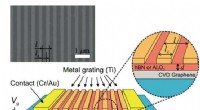
Nanofabrication is expected to play a major role in the next generation of chip manufacture. By reducing the size of transistors, it is possible to pack more transistors onto a single chip, which can lead to increased performance and lower power consumption. Nanofabrication is also expected to enable the development of new types of chips, such as neuromorphic chips that mimic the human brain.
Challenges
There are a number of challenges associated with nanofabrication, including:
* Cost: Nanofabrication is a complex and expensive process, and it is not always possible to justify the cost of producing nanometer-scale features.
* Precision: Nanofabrication requires a high degree of precision, and it can be difficult to produce features with the desired dimensions.
* Reliability: Nanometer-scale features can be more susceptible to defects, which can lead to lower yields and higher costs.
Conclusion
Nanofabrication is a promising technology with the potential to revolutionize a wide variety of industries. However, there are a number of challenges associated with nanofabrication that need to be overcome before it can be widely adopted.