Block copolymers are macromolecules composed of two or more chemically distinct polymer blocks. In solution, block copolymers can self-assemble into a variety of ordered structures, such as spheres, cylinders, and lamellae. The size and shape of these structures are determined by the relative lengths of the polymer blocks and the solvent conditions.
Micro- and Nanoparticles from Block Copolymer Self-Assembly
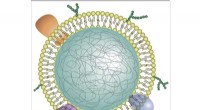
The self-assembly of block copolymers can be used to create micro- and nanoparticles with a variety of sizes, shapes, and surface properties. These particles can be used for a variety of applications, such as drug delivery, gene therapy, and tissue engineering.
Applications of Polymeric Micro- and Nanoparticles
Polymeric micro- and nanoparticles have a wide range of potential applications, including:
* Drug delivery: Polymeric micro- and nanoparticles can be used to deliver drugs to specific tissues or organs. This can improve the efficacy of drugs and reduce side effects.
* Gene therapy: Polymeric micro- and nanoparticles can be used to deliver genes to cells. This can be used to treat genetic diseases and disorders.
* Tissue engineering: Polymeric micro- and nanoparticles can be used to create scaffolds for tissue engineering. This can be used to repair damaged tissue or grow new tissue.
Conclusion
Polymeric micro- and nanoparticles are a promising new class of materials with a wide range of potential applications. Their unique properties make them ideal for drug delivery, gene therapy, and tissue engineering.