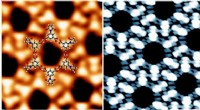
In a new study, engineers at the University of Pennsylvania have used atomic force microscopy to measure the friction between a diamond surface and a nanoscale tip. They found that the friction was significantly lower than expected, and that the slipperiness was caused by the presence of hydrogen and oxygen atoms on the surface.
The researchers believe that their findings could have implications for the design of new materials and devices that require low friction. For example, diamond could be used as a coating for microelectromechanical systems (MEMS) or other devices that require precise movement.
"Our findings provide a new understanding of the atomic-scale mechanisms that contribute to the slipperiness of diamond," said study lead author, Mauricio Terrones. "This knowledge could be used to design new materials and devices that require low friction."
The study is published in the journal Nature Nanotechnology.