In vitro studies: Researchers conduct experiments using cell cultures or tissue models to observe the direct effects of nanoparticles on living cells. These studies can provide insights into nanoparticle toxicity, uptake, and interactions with cellular components.
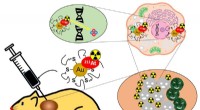
Animal studies: Animal models, such as mice or rats, are used to assess the systemic effects of nanoparticles. These studies investigate the distribution, metabolism, and long-term impacts of nanoparticles in a whole-organism context.
Computational modeling: Computer simulations and mathematical models are employed to predict nanoparticle behavior and interactions at the molecular and cellular levels. These models can help understand processes like nanoparticle transport, binding affinities, and reaction kinetics.
Toxicological assessment: Nanoparticles are evaluated for their potential toxicity using standard toxicological methods. This involves studying the effects of different nanoparticle concentrations on cell viability, oxidative stress, inflammation, and other toxicity endpoints.
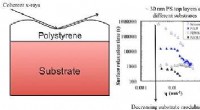
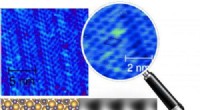
Physiochemical characterization: Thorough characterization of nanoparticles is crucial for understanding their behavior. Properties such as size, shape, surface charge, and composition are important factors that influence nanoparticle interactions with biological systems.
Biodistribution and clearance studies: These studies track the distribution of nanoparticles in the body after administration. They help determine the organs or tissues that accumulate nanoparticles and the routes of their excretion or clearance.
Long-term safety studies: Nanoparticles may have long-term effects that may not be apparent in short-term studies. Conducting long-term toxicity studies is essential to evaluate the potential health risks associated with chronic nanoparticle exposure.
Regulatory guidelines and standards are followed to ensure the safety of nanoparticles before they are approved for use in consumer products or medical applications. The combination of experimental studies, computational modeling, and rigorous characterization helps researchers and regulators make informed predictions about nanoparticle behavior in the human body.