Carbon nanotubes (CNTs) are tiny cylindrical structures made of carbon atoms. They have unique electrical and mechanical properties that make them promising candidates for a variety of applications, including high-speed genetic sequencing.
DNA sequencing is the process of determining the order of nucleotides in a DNA molecule. It is a fundamental tool in genetics and genomics, and it is used in a wide variety of applications, such as medical diagnostics, forensic science, and evolutionary biology.
Traditional DNA sequencing methods are relatively slow and expensive. However, CNTs could potentially be used to develop new sequencing methods that are much faster and cheaper.
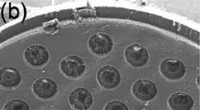
One way that CNTs could be used for DNA sequencing is by using them to create nanopores. Nanopores are tiny holes in a material that can be used to detect the passage of individual molecules. When a DNA molecule passes through a nanopore, it creates a unique electrical signal that can be used to identify the sequence of nucleotides in the DNA molecule.
CNTs can be used to create nanopores that are very small, only a few nanometers in diameter. This small size allows them to detect the passage of individual DNA molecules with high accuracy.
Another way that CNTs could be used for DNA sequencing is by using them to create biosensors. Biosensors are devices that can detect the presence of a specific molecule. CNTs can be functionalized with molecules that bind to specific DNA sequences. When a DNA molecule binds to a CNT biosensor, it creates a change in the electrical properties of the CNT that can be detected.
CNT biosensors could be used to sequence DNA by detecting the presence of specific DNA sequences. This approach could be much faster than traditional sequencing methods, as it would not require the DNA molecule to be amplified or labeled.
CNTs are still a relatively new material, and there are many challenges that need to be overcome before they can be used for DNA sequencing. However, the potential benefits of CNT-based sequencing methods are significant, and researchers are actively working to develop these technologies.
Potential Benefits of CNT-Based DNA Sequencing
CNT-based DNA sequencing methods could offer a number of advantages over traditional sequencing methods, including:
* Speed: CNT-based sequencing methods could be much faster than traditional sequencing methods, as they do not require the DNA molecule to be amplified or labeled.
* Cost: CNT-based sequencing methods could be much cheaper than traditional sequencing methods, as they do not require the use of expensive enzymes or reagents.
* Accuracy: CNT-based sequencing methods could be more accurate than traditional sequencing methods, as they can detect the passage of individual DNA molecules with high accuracy.
* Portability: CNT-based sequencing devices could be portable, allowing for DNA sequencing to be performed in a variety of settings.
Challenges to CNT-Based DNA Sequencing
There are a number of challenges that need to be overcome before CNT-based DNA sequencing methods can be used in practice. These challenges include:
* Creating nanopores that are small enough to detect individual DNA molecules.
* Functionalizing CNTs with molecules that bind to specific DNA sequences.
* Developing methods to read the electrical signals generated by CNT-based nanopores and biosensors.
* Addressing the potential toxicity of CNTs.
Researchers are actively working to overcome these challenges, and the development of CNT-based DNA sequencing methods is a promising area of research.