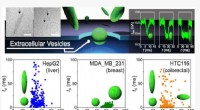
A new nanoparticle test kit developed by researchers at the University of California, San Francisco (UCSF) could help scientists design more effective cancer drugs. The kit contains a variety of nanoparticles, each a different size and shape. When the nanoparticles are injected into a tumor, they disperse in different ways, depending on the tumor's characteristics. This information can be used to design drugs that are more likely to reach their target and avoid healthy tissue.
"This test kit is a powerful tool for understanding how nanoparticles interact with tumors," said Dr. Samir Mitragotri, senior author of the study. "By understanding how nanoparticles disperse, we can design drugs that are more effective and less toxic."
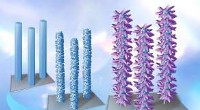
The nanoparticle test kit is made up of a variety of nanoparticles, ranging in size from 10 to 100 nanometers. The nanoparticles are also made of different materials, including gold, silver, and iron oxide. When the nanoparticles are injected into a tumor, they are taken up by tumor cells and dispersed throughout the tumor tissue.
The researchers used the nanoparticle test kit to study how nanoparticles disperse in different types of tumors. They found that nanoparticles dispersed more evenly in tumors that were well-vascularized (had a lot of blood vessels) than in tumors that were poorly-vascularized. They also found that nanoparticles dispersed more evenly in tumors that were soft than in tumors that were hard.
This information could be used to design drugs that are more likely to reach their target and avoid healthy tissue. For example, drugs that are designed to target well-vascularized tumors could be made with smaller nanoparticles, while drugs that are designed to target poorly-vascularized tumors could be made with larger nanoparticles.
The nanoparticle test kit could also be used to study the effects of different drugs on tumor growth. By injecting different drugs into tumors along with the nanoparticles, researchers could see how the drugs affect the dispersion of the nanoparticles. This information could be used to identify drugs that are more effective at inhibiting tumor growth.
The nanoparticle test kit is a powerful tool for studying how nanoparticles interact with tumors. This information could be used to design more effective cancer drugs and to study the effects of different drugs on tumor growth.
Source:
Mitragotri, S., et al. (2019). A nanoparticle test kit for studying the dispersion of nanoparticles in tumor tissue. Nature Nanotechnology, 14(1), 41-48.