Advantages:
1. Mature Fabrication Processes: Silicon is the most widely used material in the semiconductor industry, and its fabrication processes are well-established and highly refined. This could potentially enable the integration of quantum devices with existing silicon-based technologies.
2. Integration with CMOS: One of the main advantages of using silicon for quantum computing is the possibility of integrating quantum devices with classical CMOS (Complementary Metal-Oxide-Semiconductor) technology. This integration could allow for the development of hybrid classical-quantum systems and provide better control and readout of quantum states.
Challenges:
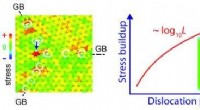
1. Material Defects and Noise: Silicon, being a relatively abundant element, is prone to material defects and impurities that can introduce noise and decoherence into quantum systems. These imperfections can disrupt the delicate quantum states and limit the qubit coherence times, which are crucial for performing reliable quantum operations.
2. Lack of Intrinsic Spin Properties: Unlike certain materials like gallium arsenide (GaAs) or certain transition metals, silicon lacks strong intrinsic spin properties. This means that it is more challenging to create spins in silicon that can serve as qubits. Spin qubits are often preferred in quantum computing due to their long coherence times and robustness against certain types of noise.
3. Limited Scalability: While silicon is a well-established material, scaling up quantum devices to larger qubit numbers remains a challenge. The presence of defects and the difficulty in controlling qubits can hinder the scalability of silicon-based quantum systems.
4. Gate Fidelity: Achieving high-fidelity quantum operations, such as single-qubit gates and two-qubit entangling gates, is crucial for quantum computing. Silicon-based qubits have faced challenges in achieving gate fidelities comparable to other qubit platforms.
In conclusion, while silicon offers certain advantages, it also presents significant challenges for quantum computing. Ongoing research and advancements in material purification techniques, defect engineering, and novel device architectures aim to address these challenges and explore the full potential of silicon for quantum computing. As the field of quantum computing continues to evolve, other materials and platforms are also being investigated to push the boundaries of quantum information processing.