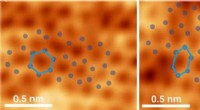
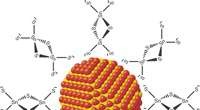
At the heart of this research lies the exploration of how the surface properties of nanomaterials, such as their chemical composition, roughness, and charge, can impact the conformation and activity of proteins. These factors play a critical role in determining how proteins interact with their surroundings and perform their biological functions.
Using a combination of cutting-edge experimental techniques and computational modeling, the researchers studied the behavior of proteins on a variety of nanomaterial surfaces. They observed that the surface properties of the nanomaterials had a profound effect on the structure, stability, and activity of the proteins.
For instance, they found that certain nanomaterial surfaces can induce proteins to adopt specific conformations, enhancing their enzymatic activity. Conversely, other surfaces may cause proteins to denature or lose their functionality. These findings provide a deeper understanding of the intricate interactions between nanomaterials and proteins, paving the way for the rational design of nanomaterials with tailored properties for specific applications.
The research team also investigated the effect of protein adsorption on the surface properties of nanomaterials. They discovered that the adsorption of proteins can modify the surface chemistry and charge of nanomaterials, leading to changes in their interactions with other molecules or cells. This phenomenon opens up exciting possibilities for controlling the behavior of nanomaterials and their interactions with biological systems.
Overall, this groundbreaking research underscores the importance of understanding the interactions between nanomaterial surfaces and proteins. It provides a foundation for developing next-generation biomaterials and nanodevices that can leverage the unique properties of nanomaterials to manipulate protein behavior for various applications, including drug delivery, tissue engineering, and biosensing.