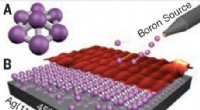
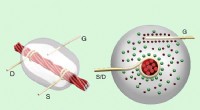
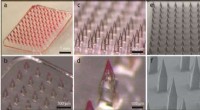
The equations, published in the journal Nature Nanotechnology, show that the behavior of nanostructures can be described by classical physics, or at least a modified version of classical physics that makes small corrections for quantum effects. This means that quantum mechanics does not play a significant role in the behavior of nanostructures.
This finding is important for the development of nanotechnology, as it means that engineers can design and build nanostructures without having to worry about quantum effects. This could lead to a new generation of electronic devices, solar cells, and other technologies that are smaller, faster, and more efficient than current devices.
The researchers' equations are based on a technique called the density functional theory (DFT). DFT is a widely used method for calculating the properties of materials, and it has been successful in describing the behavior of a wide variety of materials, from simple atoms to complex molecules.
The researchers modified DFT to include small corrections for quantum effects. These corrections are necessary because DFT is a classical theory, and it does not account for the wave-particle duality of electrons.
The researchers' equations are a significant advance in the understanding of nanostructures. They provide a definitive answer to the question of whether quantum mechanics plays a role in the behavior of nanostructures, and they open the door to a new generation of nanotechnology devices.
In addition to their importance for nanotechnology, the researchers' equations also have implications for fundamental physics. They show that the laws of classical physics are sufficient to describe the behavior of matter at the nanoscale. This is a significant finding, as it challenges the traditional view that quantum mechanics is the only theory that can describe the behavior of matter at the atomic and subatomic scales.
The researchers' equations are a powerful tool for understanding the behavior of nanostructures. They are sure to play a major role in the development of future nanotechnology devices.