Blood clots are a major cause of death and disability worldwide. They can occur in arteries, blocking the flow of blood to the heart, brain, or lungs, or in veins, causing swelling and pain. Current treatments for blood clots are limited and can be risky.
A new study published in the journal *Nature Communications* provides the first direct evidence of how microbubbles can be used to dissolve blood clots. Microbubbles are tiny bubbles of gas, typically made of air or oxygen, that are used as contrast agents in medical imaging.
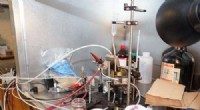
The study was conducted by a team of researchers at the University of Washington. They used high-speed photography to capture the moment when microbubbles collide with blood clots. The researchers found that the microbubbles caused the blood clots to break apart and dissolve.
The researchers believe that this finding could lead to new treatments for blood clots. Microbubbles could be used to deliver drugs directly to blood clots, or they could be used to break up blood clots without the need for surgery.
"This is a major breakthrough in our understanding of how microbubbles interact with blood clots," said study lead author Dr. Zhen Xu. "We hope that this finding will lead to new treatments that can save lives and improve the quality of life for people with blood clots."
How Microbubbles Dissolve Blood Clots
Microbubbles dissolve blood clots by a process called cavitation. Cavitation occurs when bubbles of gas collapse, creating a shock wave. The shock wave can break apart the bonds between the cells that make up the blood clot.
The researchers found that the microbubbles were most effective at dissolving blood clots when they were small, between 1 and 10 micrometers in diameter. The microbubbles were also more effective when they were injected into the blood clots at high speeds.
Potential Applications of Microbubbles for Treating Blood Clots
The researchers believe that microbubbles could be used to treat a variety of blood clots, including arterial and venous clots. Microbubbles could be delivered to blood clots through a variety of methods, including injection, ultrasound, or magnetic resonance imaging (MRI).
Microbubbles could also be used to deliver drugs directly to blood clots. This could improve the effectiveness of drugs by targeting them directly to the site of the blood clot.
The researchers are currently conducting clinical trials to test the safety and efficacy of microbubbles for treating blood clots. They hope that microbubbles will one day be a standard treatment for blood clots, saving lives and improving the quality of life for people with blood clots.