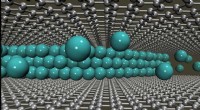
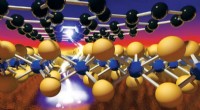
The materials, called two-dimensional transition-metal dichalcogenides (TMDs), are one-atom-thick crystals with a structure similar to graphene, which is made of carbon atoms.
Researchers have long been interested in TMDs because of their remarkable properties, including their high electrical conductivity, semiconducting properties, and strong light absorption. These properties make them promising candidates for a range of applications, such as transistors, solar cells, and light-emitting diodes.
However, the synthesis of large-scale, high-quality TMDs has been challenging. In this project, the researchers will develop new methods to synthesize TMDs and study their fundamental properties. They will also explore the potential of these materials for electronic and photonic devices.
"We are excited to explore the potential of these materials for next-generation electronic and photonic devices," said Andrew Smith, a professor of mechanical engineering at UC San Diego and the principal investigator on the grant. "We believe that TMDs could have a major impact on the development of these devices, and we look forward to seeing the results of our research."
In addition to Smith, the research team includes post-doctoral researcher Chenhao Jin and graduate students Jing Shi, Yuxuan Wang, and Yi-Hsin Chen.