Two-dimensional (2D) materials are a class of materials that are only a few atoms thick. They have attracted a great deal of interest in recent years due to their unique electronic properties, which make them promising candidates for next-generation nanoelectronic devices.
One of the most important properties of 2D materials is their high carrier mobility. This means that electrons can move through them very quickly, which is essential for high-performance electronic devices. In addition, 2D materials are also very thin, which allows them to be integrated into devices with smaller form factors.
Some of the most promising 2D materials for nanoelectronics include:
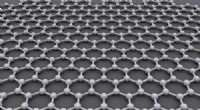
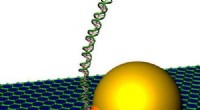
* Graphene: Graphene is a single-layer sheet of carbon atoms. It is the thinnest, strongest, and most conductive material known. Graphene has been shown to have excellent carrier mobility and is being investigated for use in a variety of electronic devices, including transistors, solar cells, and batteries.
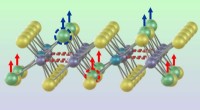
* Transition metal dichalcogenides (TMDs): TMDs are a class of materials that are made up of layers of transition metal atoms and chalcogen atoms. TMDs have a wide range of electronic properties, depending on the specific materials used. Some TMDs are semiconductors, while others are metals or insulators. TMDs are being investigated for use in a variety of electronic devices, including transistors, light-emitting diodes (LEDs), and photodetectors.
* Topological insulators: Topological insulators are a class of materials that have a unique band structure that results in the emergence of conducting surface states. These surface states are protected from scattering by impurities and defects, which makes topological insulators very promising for use in high-performance electronic devices. Topological insulators are being investigated for use in a variety of electronic devices, including transistors, spintronic devices, and quantum computing devices.
2D materials are still in the early stages of development, but they have the potential to revolutionize the field of nanoelectronics. Their unique electronic properties make them ideal candidates for next-generation nanoelectronic devices that are smaller, faster, and more energy-efficient than current devices.
While 2D materials have a great deal of potential for use in nanoelectronics, there are also a number of challenges that need to be overcome before they can be used in commercial devices.
One challenge is the fact that 2D materials are often very difficult to synthesize. This is because they are so thin that they can easily be damaged or contaminated. Another challenge is the fact that 2D materials are often not very stable. This means that they can easily degrade or oxidize when exposed to air or moisture.
Finally, 2D materials are often very difficult to integrate into devices. This is because they are so thin that they can easily be damaged or delaminated.
Despite these challenges, researchers are making progress in overcoming them. As the field of 2D materials continues to develop, we can expect to see these materials being used in a wider variety of nanoelectronic devices in the future.
Two-dimensional materials have the potential to revolutionize the field of nanoelectronics. Their unique electronic properties make them ideal candidates for next-generation nanoelectronic devices that are smaller, faster, and more energy-efficient than current devices. However, there are a number of challenges that need to be overcome before 2D materials can be used in commercial devices. As the field of 2D materials continues to develop, we can expect to see these materials being used in a wider variety of nanoelectronic devices in the future.