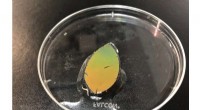
1. Chemical Vapor Deposition (CVD): Chemical vapor deposition is a widely used technique for growing carbon nanostructures. Engineers have gained a deeper understanding of the role of various process parameters, such as temperature, pressure, gas composition, and catalyst selection, in controlling the growth and morphology of carbon nanostructures. By optimizing these parameters, it is now possible to achieve precise control over the size, shape, and crystallinity of carbon nanotubes and graphene.
2. Catalyst Engineering: The catalyst plays a crucial role in initiating and facilitating the growth of carbon nanostructures. Engineers have developed advanced catalyst systems, often involving transition metals or metal oxides, that exhibit high activity and selectivity for specific carbon nanostructures. Catalyst design strategies include controlling the size, morphology, composition, and support materials to optimize the growth process and achieve desired structural complexity.
3. Plasma-Assisted Growth: Plasma-assisted growth techniques, such as plasma-enhanced chemical vapor deposition (PECVD), have emerged as powerful tools for the synthesis of carbon nanostructures. Plasma offers additional control over the growth environment, allowing for the introduction of reactive species and energy to promote the formation of specific carbon structures. By manipulating plasma parameters, engineers can influence the nucleation, growth, and doping of carbon nanostructures, enabling the realization of complex architectures.
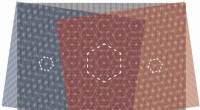
4. Self-Assembly and Directed Growth: Carbon nanostructures can self-assemble into intricate patterns and hierarchical structures through interactions between individual nanostructures or their functional groups. Engineers have explored strategies to harness these self-assembly processes and guide the growth of carbon nanostructures along specific directions or templates. This has led to the development of novel carbon-based architectures with controlled porosity, alignment, and functionalization, expanding their potential applications.
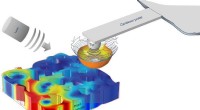
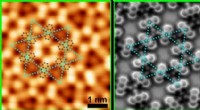
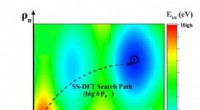
5. Computational Modeling and Simulation: Computational modeling and simulation have become indispensable tools for understanding the growth mechanisms of carbon nanostructures. These techniques provide insights into the atomic-level processes, thermodynamics, and kinetics involved in their formation. By simulating different growth scenarios and evaluating the effects of various parameters, engineers can gain predictive capabilities and optimize the synthesis conditions for desired carbon nanostructures.
In summary, engineers have made significant progress in understanding how complex carbon nanostructures form. Through advances in chemical vapor deposition, catalyst engineering, plasma-assisted growth, self-assembly, and computational modeling, they can now precisely control the growth and properties of carbon nanostructures, paving the way for their integration into high-performance devices and technologies.