Nanoparticles are particles that are so small that they cannot be seen with the naked eye. They are typically only a few nanometers in size, which is about one billionth of a meter. Nanoparticles have a wide range of applications, including in medicine, electronics, and manufacturing.
The growth of nanoparticles is a complex process that is not fully understood. However, researchers at UCI have now made significant progress in understanding how nanoparticles grow when exposed to helium.
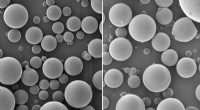
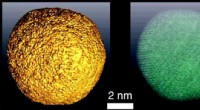
In their study, the researchers used a technique called transmission electron microscopy to image nanoparticles as they grew. They found that the nanoparticles grew in a very specific way when exposed to helium. The nanoparticles first formed small clusters, which then grew into larger clusters. These larger clusters eventually grew into the final nanoparticles.
The researchers believe that the growth of nanoparticles in helium is due to a process called Ostwald ripening. Ostwald ripening is a process in which small particles grow at the expense of larger particles. In the case of nanoparticles, the small particles are the clusters of atoms, and the larger particles are the final nanoparticles.
The findings of this study could lead to the development of new materials and technologies. For example, the researchers believe that the growth of nanoparticles in helium could be used to create new materials with specific properties. These materials could be used in a wide range of applications, such as in electronics, medicine, and manufacturing.