1. Evolution of Sticky Toepads:
- Geckos belong to the taxonomic order Squamata, which includes lizards and snakes.
- Over time, certain gecko species developed specialized toepads to enhance their climbing and hunting capabilities.
- The evolution of sticky toepads is attributed to genetic mutations and natural selection favoring individuals with superior adhesion.
- Over generations, the toepads became more sophisticated and effective in gripping surfaces.
2. Structure of Gecko Toepads:
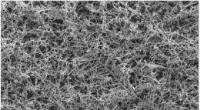
- Gecko toepads consist of millions of tiny, hair-like structures called setae.
- Each seta is further composed of hundreds of even smaller structures known as spatulae.
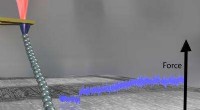
- The spatulae are tipped with nanoscale hooks that create a van der Waals force, allowing geckos to stick to surfaces without the use of glue or suction.
3. Adhesive Mechanisms:
- Van der Waals forces: The spatulae on gecko setae interact with the molecules on the surface, creating weak intermolecular forces known as van der Waals forces.
- Millions of setae working together increase the overall adhesive force, enabling geckos to cling to surfaces.
4. Adhesive Technologies Inspired by Geckos:
- The study of gecko toepads has led to biomimetic adhesive technologies.
- Scientists have developed synthetic materials that mimic the structure and properties of gecko setae, creating gecko-inspired adhesives.
- These adhesives have various applications, including:
- Robotics: Gecko-inspired adhesives enable robots to climb vertical surfaces and navigate complex terrain.
- Medical devices: Used in surgical tape, wound dressings, and other medical applications where gentle and non-damaging adhesion is required.
- Industrial applications: Employed in packaging, electronics, and manufacturing processes that demand precise and temporary adhesion.
5. Challenges and Limitations:
- While gecko-inspired adhesives have shown great promise, they still face certain challenges:
- Durability: Synthetic adhesives may not possess the same durability as natural gecko toepads, which can withstand repeated use and various environmental conditions.
- Surface contamination: Dirt and moisture can affect the adhesive properties of gecko-inspired materials.
6. Ongoing Research:
- Research is ongoing to improve the performance and durability of gecko-inspired adhesives.
- Scientists explore different materials, designs, and fabrication techniques to overcome challenges.
In conclusion, the evolution of sticky toepads in geckos has provided valuable insights into adhesive mechanisms at the nanoscale. By mimicking the unique structure and properties of gecko setae, scientists have developed innovative adhesive technologies that find applications in various fields. While there are ongoing challenges to overcome, gecko-inspired adhesives hold great potential for advancing adhesive technologies and impacting fields ranging from robotics to medicine and manufacturing.