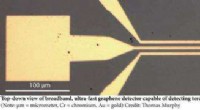
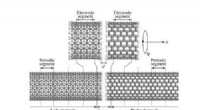
Graphene, a single-atom-thick sheet of carbon atoms arranged in a hexagonal lattice, has attracted significant attention due to its exceptional electrical, thermal, and mechanical properties. In particular, the interface between graphene and metal electrodes plays a crucial role in determining the overall performance of graphene-based devices. Understanding and controlling the properties of these interfaces are essential for optimizing the performance of graphene-based electronic and optoelectronic devices.
Electron-Phonon Coupling at the Graphene-Metal Interface
One fundamental aspect of graphene-metal interfaces is the electron-phonon coupling, which describes the interaction between electrons and lattice vibrations (phonons) in the graphene layer. This interaction significantly affects the electrical and thermal transport properties of graphene. When electrons travel through the graphene layer, they can scatter due to the presence of phonons, resulting in an increase in electrical resistance and a decrease in thermal conductivity.
Researchers Demonstrate Probing of Electron-Phonon Coupling
In a recent study, researchers from the University of California, Berkeley, have developed an innovative technique to probe the electron-phonon coupling at graphene-metal interfaces. They used a combination of electrical transport measurements and scanning tunneling microscopy (STM) to investigate the influence of different metal electrodes on the electron-phonon interactions.
The researchers found that the electron-phonon coupling strength varied significantly depending on the metal type. For example, graphene on a gold substrate exhibited weaker electron-phonon coupling compared to graphene on a copper substrate. This variation was attributed to differences in the electronic structures and phonon spectra of the metal electrodes.
Implications for Graphene-Based Devices
The results of this study provide important insights into the intricate interplay of electrons and phonons at graphene-metal interfaces. By understanding and controlling these interactions, device engineers can optimize the performance of graphene-based devices for various applications, including high-speed transistors, solar cells, and thermal management materials.
In summary, the research team's findings highlight the importance of graphene-metal interfaces in determining the overall properties of graphene-based devices. By manipulating the electron-phonon coupling at these interfaces, it is possible to enhance the performance and functionality of graphene-based technologies.