When ice forms on surfaces, it can lead to a range of problems, from slippery roads and sidewalks to power outages and aircraft accidents. Conventional methods of de-icing often involve the use of chemicals or mechanical scraping, both of which can be time-consuming, labor-intensive, and environmentally unfriendly.
The research team, led by Professor Yutaka Masuda from the Tokyo University of Science, sought to explore an alternative approach by studying how surface gradients affect the behavior of water droplets. They hypothesized that by controlling the surface topography, it might be possible to reduce the adhesion strength between ice and the surface, making it easier to remove.
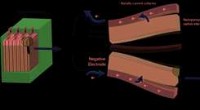
To test their hypothesis, the researchers fabricated a series of surfaces with different gradient structures using a technique called "microfabrication." They then placed water droplets on these surfaces and observed their behavior.
Their observations revealed that the gradient surfaces significantly influenced the droplet behavior. On surfaces with a gradual slope, the droplets spread more easily and exhibited reduced contact angles compared to surfaces with a steeper slope. This reduction in contact angle indicates weaker adhesion between the droplet and the surface.
Furthermore, the team found that the surface gradients affected the freezing and melting behavior of the droplets. On surfaces with a gradual slope, the droplets froze more slowly and melted more quickly, which could be advantageous in preventing ice accumulation.
Based on these findings, the researchers concluded that surface gradients can indeed influence droplet behavior, including ice formation and adhesion, suggesting their potential application in the development of anti-icing surfaces. They propose that such surfaces could be used in various fields and applications where ice prevention is crucial, such as transportation, power transmission, and aerospace.
This discovery highlights the importance of understanding and manipulating surface properties at the microscopic level to achieve desired macroscopic effects. It opens up exciting possibilities for the design and fabrication of novel surfaces with tailored functionalities for a wide range of applications beyond anti-icing, including self-cleaning surfaces, liquid transport, and microfluidics.