Nanoparticles are materials that have at least one dimension that is less than 100 nanometers (nm). They are of great interest to scientists and engineers because they have unique properties that can be exploited for a variety of applications, such as energy storage, catalysis, and sensing.
The shape of nanoparticles can have a significant impact on their properties. For example, spherical nanoparticles tend to have higher surface energies than non-spherical nanoparticles. This means that spherical nanoparticles are more reactive and can more easily form bonds with other atoms or molecules. This can be an advantage for some applications, such as catalysis, but it can also be a disadvantage for other applications, such as energy storage.
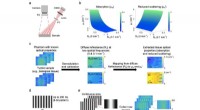
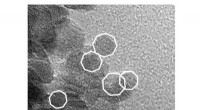
In the case of energy storage, non-spherical nanoparticles can have a higher energy density than spherical nanoparticles. This is because non-spherical nanoparticles have a larger surface area, which allows them to store more energy. The new imaging technique developed by the Berkeley engineers allows scientists and engineers to better understand how the shape of nanoparticles affects their energy storage properties. This information can then be used to design nanoparticles that are more efficient for energy storage applications.
The Berkeley team's research is published in the journal Nano Letters.