Electrostatic interactions: Small organic ions can carry a positive or negative charge, which can interact with the oppositely charged surface of gold nanoparticles. This electrostatic attraction helps to keep the nanoparticles from agglomerating.
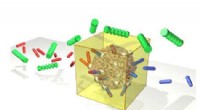
Steric hindrance: Small organic ions can also stabilize gold nanoparticles by steric hindrance. This means that the ions physically block the nanoparticles from coming into contact with each other. This is especially important for nanoparticles that are very small, as they have a high surface area and are therefore more likely to agglomerate.
Ligand-metal interactions: Small organic ions can also stabilize gold nanoparticles by forming ligand-metal bonds with the gold atoms on the surface of the nanoparticles. This type of interaction is especially strong for ions that contain sulfur or nitrogen atoms, which have a high affinity for gold.
By understanding how small organic ions stabilize gold nanoparticles, scientists can better control the size, shape, and properties of these nanoparticles. This is important for a variety of applications, such as catalysis, drug delivery, and sensing.
Here are some specific examples of how small organic ions have been used to stabilize gold nanoparticles:
* Citrate ions are commonly used to stabilize gold nanoparticles. Citrate ions are negatively charged, and they interact electrostatically with the positively charged surface of gold nanoparticles. This interaction helps to keep the nanoparticles from agglomerating.
* Thiolates are organic ions that contain a sulfur atom. Thiolates form strong ligand-metal bonds with gold atoms, which helps to stabilize gold nanoparticles. Thiolates are often used to functionalize gold nanoparticles for specific applications.
* Polymers are large organic molecules that can be used to stabilize gold nanoparticles. Polymers can interact with gold nanoparticles through a variety of mechanisms, including electrostatic interactions, steric hindrance, and ligand-metal interactions. Polymers are often used to create composite materials that contain gold nanoparticles.
By carefully selecting the type of small organic ion used to stabilize gold nanoparticles, scientists can control the size, shape, and properties of these nanoparticles for a variety of applications.