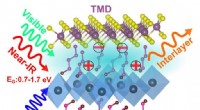
When nanoparticles collide with each other or with other objects, several phenomena can occur depending on the specific properties of the nanoparticles and the collision environment. Here are some of the key things that can happen during nanoparticle collisions:
1. Elastic Collisions:
- Elastic collisions are those where the total kinetic energy and momentum of the system are conserved.
- Nanoparticles can undergo elastic collisions when the forces involved are repulsive, and the nanoparticles bounce off each other without any significant change in their internal structure or properties.
- Elastic collisions are more likely to occur when the nanoparticles are hard, spherical, and have a high degree of surface smoothness.
2. Plastic Collisions:
- Plastic collisions are inelastic collisions where kinetic energy is lost and converted into other forms such as heat, sound, or deformation of the nanoparticles.
- Plastic collisions occur when the forces involved are attractive or when the nanoparticles have a soft, deformable structure.
- These collisions can lead to changes in the shape and structure of the nanoparticles.
3. Coalescence and Agglomeration:
- Coalescence occurs when two or more nanoparticles merge together to form a single, larger nanoparticle.
- Agglomeration occurs when nanoparticles loosely aggregate or stick together without forming a unified structure.
- These processes can be driven by various forces, such as van der Waals forces, magnetic interactions, or chemical reactions, and can significantly affect the nanoparticle properties and behavior.
4. Fragmentation:
- Fragmentation occurs when a larger nanoparticle breaks into smaller nanoparticles upon collision.
- This can happen due to high impact forces or internal stress buildup within the nanoparticle.
- Fragmentation can lead to the formation of new surfaces and potentially alter the properties and reactivity of the nanoparticles.
5. Charge Transfer and Electronic Effects:
- When nanoparticles collide, there can be an exchange of electrons or charge transfer between them.
- This can affect the electronic properties, such as conductivity or photoluminescence, which are important for various applications, such as electronics, catalysis, and sensing.
- Charge transfer can also influence the reactivity and behavior of the nanoparticles.
6. Chemical Reactions:
- Nanoparticle collisions can initiate or facilitate chemical reactions due to the high surface reactivity and energy associated with nanoparticles.
- These reactions can lead to the formation of new compounds or the modification of the existing nanoparticles, which can have implications for catalysis, synthesis, and environmental processes involving nanoparticles.
Understanding the collision behavior of nanoparticles is essential for predicting their properties, behavior, and potential risks in various applications, including materials science, nanomedicine, environmental science, and industrial processes.