*Research team identify new phenomenon that leads to improved understanding of the method*
DNA sequencing is a key part of modern biology and is used in many contexts such as medical diagnostics, forensic science and evolutionary biology. Many new techniques have recently emerged for sequencing DNA, offering many advantages over the previously dominant Sanger sequencing. These new techniques employ methods that are faster and cheaper, often allowing sequencing of DNA fragments in a matter of hours. Nanopore sequencing uses biological or synthetic nanopores to force single DNA or RNA molecules through a protein pore. This process can then be used to establish the sequence of nucleotides along a DNA or RNA strand.
A new study by Dr. Sebastian Getfert, Dr. Jörg Bewarder, both post-docs in the Department of Physics, and Professor Ulrich Rant, head of the department, has identified a new phenomenon that influences nanopore sensing and will therefore improve the understanding and application of this technology.
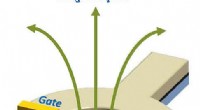
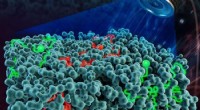
Currently, nanopore sensing in biological pores relies on the controlled slowing of the translocation of DNA molecules by applying an electrical field over the nanopore. The researchers show through multi-scale molecular dynamics simulations that, in the presence of this field, parts of the DNA can transiently exit the pore and loop out into the solvent, which affects the measured DNA signal and can lead to difficulties in data interpretation.
Getfert and Rant: "Nanopore sensing is a highly promising technology and our work contributes to the fundamental understanding of the nanopore sensing process, ultimately enabling scientists to further develop and optimize the method."
The study of the physics department was published recently in the renowned scientific journal Nature Communications.