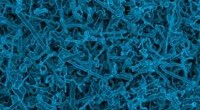
The study, published in the journal "Environmental Science & Technology," focused on the blue mussel (Mytilus edulis), a common marine bivalve found in coastal regions. Mussels are filter feeders, meaning they strain tiny particles from the water and consume them. This makes them particularly vulnerable to microplastic pollution.
For their research, the scientists exposed blue mussels to different concentrations of microplastic fibers in a controlled laboratory environment. They then analyzed the mussels to see how the fibers affected their behavior, physiology, and overall health.
The findings showed that blue mussels were able to ingest microplastic fibers, but they were not able to digest them. This resulted in the accumulation of fibers in the mussels' digestive systems, which could have potential consequences for their long-term health.
Furthermore, the study revealed that exposure to microplastic fibers affected the mussels' feeding behavior. The mussels displayed a reduced filtration rate, indicating a decrease in their ability to filter and consume food particles from the water. This could impact their energy intake and overall growth.
The researchers also observed changes in the gene expression of the blue mussels exposed to microplastic fibers. Gene expression is the process by which genetic information is converted into functional proteins. The alterations in gene expression suggested that the mussels were undergoing physiological responses in an attempt to cope with the presence of the microplastic fibers.
While the study provided insights into the impact of microplastic fibers on blue mussels, more research is needed to understand the full extent of their effects on marine ecosystems. Additionally, it is crucial to address the sources of microplastic pollution at their origin and develop strategies to mitigate their presence in the environment.