1. Tailoring Catalyst Performance:
Metal clusters are essential components in heterogeneous catalysis. By fine-tuning ligand interactions, the catalytic activity and selectivity of metal clusters can be enhanced. This can be achieved by modifying ligand electronic properties, steric hindrance, and coordination modes, allowing for better substrate binding and reaction control.
2. Designing Functional Nanomaterials:
Ligand interactions dictate the self-assembly and organization of metal clusters into larger nanostructures with specific functionalities. By manipulating these interactions, it is possible to create advanced nanomaterials with desired shapes, sizes, and surface properties. This enables the development of functional materials for applications such as energy storage, catalysis, and sensing.
3. Enhancing Stability and Dispersibility:
Ligands play a crucial role in stabilizing metal clusters and preventing their aggregation. By manipulating ligand interactions, the stability and dispersibility of metal clusters in various environments can be improved. This is essential for applications where metal clusters need to be well-dispersed and stable for optimal performance.
4. Engineering Electronic Properties:
Ligands can influence the electronic properties of metal clusters by modifying their electronic structure. This allows for the manipulation of energy levels, band gaps, and charge transfer processes. By fine-tuning ligand interactions, it is possible to design metal clusters with specific electronic properties for applications such as optoelectronics, energy conversion, and sensing.
5. Modulating Surface Reactivity:
Ligands determine the surface chemistry of metal clusters, which influences their reactivity and interactions with other molecules. Manipulating ligand interactions can modulate the surface reactivity of metal clusters, enabling selective binding, catalysis, and sensing applications. This is particularly important for nanotechnology-based sensing devices and functional coatings.
6. Integrating with Biological Systems:
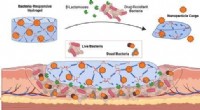
Ligand interactions can be designed to facilitate the integration of metal clusters with biological systems. By selecting ligands that are biocompatible and capable of interacting with specific biomolecules, metal clusters can be functionalized for applications in biomedicine, drug delivery, and diagnostics.
Overall, manipulating ligand interactions in metal clusters allows scientists and engineers to precisely control the properties and behavior of these nanoscale materials. This empowers the design and development of advanced nanotechnologies with tailored functions and applications across various fields, from catalysis to sensing and energy storage.