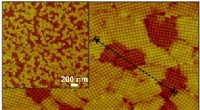
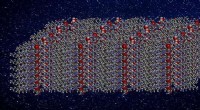
Defect Characterization: Atomic movies reveal the presence, distribution, and types of defects within perovskite materials. These defects can act as charge recombination centers, hindering the efficient transport of charge carriers. By visualizing these defects, researchers can gain a deeper understanding of how to reduce their impact and improve device performance.
Atomic-Scale Dynamics: Movies captured at an atomic level uncover the dynamic behavior of ions and molecules within perovskite materials. These dynamic processes include ion migration, phase transitions, and lattice rearrangements. Understanding these dynamics provides insights into material stability, degradation mechanisms, and the relationship between structural changes and device performance.
Interfacial Charge Transfer: Perovskite solar cells often involve multiple layers of different materials with distinct electronic properties. Atomic movies enable visualization of the charge transfer processes at these interfaces. This information is crucial for optimizing interfacial properties, minimizing charge recombination, and enhancing the flow of charge carriers within the device.
Self-Healing Mechanisms: Certain perovskite materials exhibit unique self-healing properties, where defects and structural distortions can spontaneously repair. Atomic movies provide direct evidence of these self-healing processes, aiding in the development of stable and durable perovskite solar cells.
By capturing and analyzing atomic-scale movies, researchers gain an unprecedented level of understanding about the fundamental processes that impact the efficiency and stability of perovskite solar cells. This knowledge helps in optimizing device architectures, materials engineering, and fabrication techniques, paving the way for even higher-performing and more efficient perovskite-based photovoltaic devices.