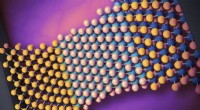
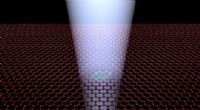
1. Atomic Structure: MXenes possess a unique atomic structure, consisting of transition metal carbides, nitrides, or carbonitrides. This structure enables a wide range of properties such as high electrical conductivity, excellent mechanical strength, and remarkable thermal stability. These properties make MXenes suitable for various applications in electronics, energy storage, and catalysis.
2. 2D Nature: The two-dimensionality of MXenes provides additional advantages. MXenes are composed of atomically thin layers, allowing for the creation of ultrathin films and coatings. This capability opens up possibilities for surface-sensitive applications and device miniaturization.
3. Surface Chemistry: MXenes have a highly functionalized surface chemistry. The surface termination of MXenes with various functional groups allows for easy modification and functionalization. This tunability enables the tailoring of MXenes for specific applications, such as in sensing, energy harvesting, and water purification.
4. Electronic Properties: MXenes exhibit diverse electronic properties depending on their composition and structure. They can be metallic, semiconducting, or even superconducting, making them promising candidates for electronic devices, batteries, and supercapacitors.
5. Electromagnetic Interference Shielding: MXenes have excellent electromagnetic interference (EMI) shielding capabilities. Their high electrical conductivity and multi-layered structure enable effective absorption and reflection of electromagnetic waves. This property makes MXenes useful in protecting electronic devices from electromagnetic interference.
6. Energy Storage: MXenes hold great promise for energy storage applications. Their high electrical conductivity, large surface area, and intercalation properties make them suitable for use in batteries, supercapacitors, and fuel cells.
7. Catalysis: MXenes have shown promising catalytic activity in various reactions. Their unique surface chemistry and high surface area provide active sites for catalytic processes. MXenes have been explored for applications in hydrogen evolution, water splitting, and CO2 conversion.
8. Biocompatibility: Some MXenes exhibit good biocompatibility and have demonstrated potential in biomedical applications. They have been studied for drug delivery, tissue engineering, and antibacterial coatings.
Despite their promising properties, MXenes are still in the early stages of development, and several challenges need to be addressed before they can be widely adopted in commercial applications. These challenges include scalable production methods, understanding of long-term stability, and toxicity assessment.
In conclusion, MXenes have emerged as exciting materials in nanotechnology due to their unique atomic structure, 2D nature, tunable surface chemistry, and diverse properties. As research and development efforts continue, MXenes hold great promise for groundbreaking applications in electronics, energy storage, catalysis, and beyond.