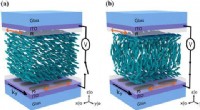
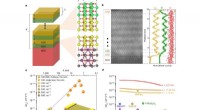
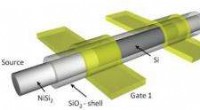
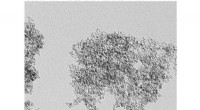
In a recent study, researchers at the Massachusetts Institute of Technology (MIT) and their colleagues have shed light on the fundamental causes of nanowire adhesion. Using a combination of experimental techniques and theoretical modeling, the team discovered that the sticking behavior originates from the interplay of capillary forces due to the liquid environment during nanowire synthesis, and van der Waals forces—weak intermolecular forces arising from the quantum mechanical interaction of atoms and molecules.
Key Findings:
Capillary Forces: Capillary forces play a dominant role in nanowire adhesion when the nanowires are surrounded by a liquid medium. These forces arise from the surface tension of the liquid and the geometry of the nanowire structure. As the liquid evaporates, the capillary forces induce the nanowires to come into close proximity, increasing the likelihood of adhesion.
Van der Waals Forces: Once the nanowires are in contact, van der Waals forces take over as the primary mechanism responsible for their sticking together. These forces, which are always attractive, become stronger as the distance between the nanowires decreases.
Role of Nanowire Density: The researchers found that the density of nanowires in a given area influences the extent of adhesion. When the nanowire density is high, capillary forces dominate, leading to stronger adhesion. Conversely, at lower nanowire densities, van der Waals forces become more significant, resulting in weaker adhesion.
Implications for Nanowire-Based Devices:
The findings from this study have important implications for the design and fabrication of nanowire-based electronic and optoelectronic devices. By controlling the nanowire density and the liquid environment during synthesis, it is possible to minimize unwanted adhesion and ensure the desired properties and functionality of the nanowire assemblies.
Furthermore, understanding the mechanisms of nanowire sticking behavior can inform strategies to prevent or mitigate adhesion in various nanotechnology applications, including integrated circuits, sensors, solar cells, and energy storage systems.
In conclusion, the research team's study provides a deeper understanding of the factors that contribute to nanowire adhesion, paving the way for the development of more efficient and reliable nanowire-based technologies.