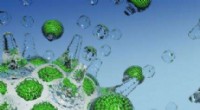
Molecular simulations, such as those performed using the LAMMPS software package, can provide valuable insights into the capsid assembly process. These simulations can model the interactions between the capsid proteins and the genetic material, as well as the structural changes that occur during assembly. This information can help researchers to identify potential targets for antiviral drugs and to design nanocontainers that mimic the virus's packaging mechanism for drug delivery.
One example of how simulations have been used to study capsid assembly is a study published in the journal Nature Communications in 2018. In this study, researchers used LAMMPS to simulate the self-assembly of the capsid of the human papillomavirus (HPV). The simulations revealed the structural details of the capsid assembly process and identified key interactions between the capsid proteins. This information could be used to design drugs that target these interactions and prevent the virus from replicating.
Another example is a study published in the journal ACS Nano in 2019. In this study, researchers used LAMMPS to simulate the self-assembly of a nanocontainer inspired by the capsid of the cowpea mosaic virus (CPMV). The simulations showed that the nanocontainer could successfully package and deliver a drug molecule to cancer cells. This study demonstrates how simulations can be used to design nanocontainers for drug delivery that mimic the efficient packaging mechanisms of viruses.
In summary, simulations of virus capsid assembly can provide valuable insights into the replication process of viruses and help to identify targets for antiviral drugs. These simulations can also be used to design nanocontainers for drug delivery that mimic the virus's efficient packaging mechanisms.




![Unveiling Structure and Conductive Properties of Novel Graphene-Like Tetraoxa[8]Circulene Polymers](https://www.scienceaq.com/article/uploadfiles/202110/2021102323340116_S.jpg)