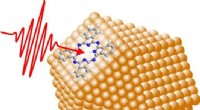
The presence of defects in diamonds , such as nitrogen -vacancy(NV) centers, can act as qubits- the fundamental units of quantum information. These defects can be controlled and manipulated to perform various quantum operations, such as storing and processing quantum bits(qubits).By introducing specific defects in a controlled manner, scientists can design diamonds with precise properties tailored to specific quantum networking applications.
One major advantage of using flawed diamonds for quantum networks is their ability to emit single photons- individual particle of light-on demand .This property is essential for quantum communication protocols such as quantum cryptography and quantum teleportation. The NV centers in flawed diamonds emit photons with high purity, making them ideal for transmitting quantum information over long distances.
Flawed diamonds also offer enhanced photostability compared to other materials used in quantum networks. They can withstand high radiation levels without compromising their quantum properties ,making them suitable for harsh environments and space-based applications. Moreover ,flawed diamonds have demonstrated resistance to temperature variations, ensuring reliable performance under varying conditions.
In summary ,flawed diamonds have emerged as a promising material platform for quantum networking due to their unique properties, such as controllable defect centers ,single-photon emission, photostability and temperature resistance .By harnessing the "flaws" in diamonds , scientists have unlocked new possibilities for advancing quantum technologies and pushing the boundaries of quantum communication and computing