Carbon nanotubes (CNTs) are cylindrical structures made of carbon atoms. They have a wide range of potential applications, including in electronics, optics, and energy storage. However, most CNTs are produced as a mixture of different chiralities, which can make them difficult to use in practical applications.
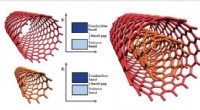
Chiral carbon nanotubes are formed by rolling up a sheet of carbon atoms in a specific way. The way in which the sheet is rolled determines the nanotube's chirality. Nanotubes with different chiralities have different properties.
In a paper published in the journal Nature Nanotechnology, the physicists at the University of Texas at Austin showed that by controlling the diet of carbon nanotubes, they could produce single-chirality carbon nanotubes. The team used a chemical vapor deposition (CVD) method to grow carbon nanotubes on a substrate. By carefully controlling the temperature, pressure, and gas flow, they were able to produce carbon nanotubes of a single chirality.
The researchers believe that their method could be used to produce single-chirality carbon nanotubes on a large scale, which would open up new possibilities for their use in a wide range of applications.
The method described in this study provides a promising approach for controlling the growth of chiral carbon nanotubes. By carefully controlling the growth conditions, it is possible to selectively synthesize carbon nanotubes with a desired chirality. This opens up new possibilities for exploring the unique properties of chiral carbon nanotubes and their potential applications in a variety of fields, including electronics, energy, and biomedical engineering.